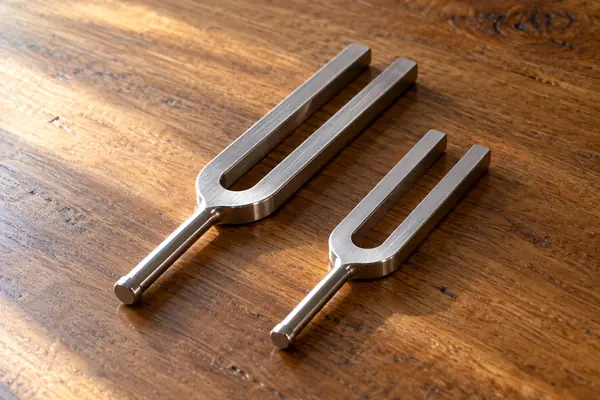
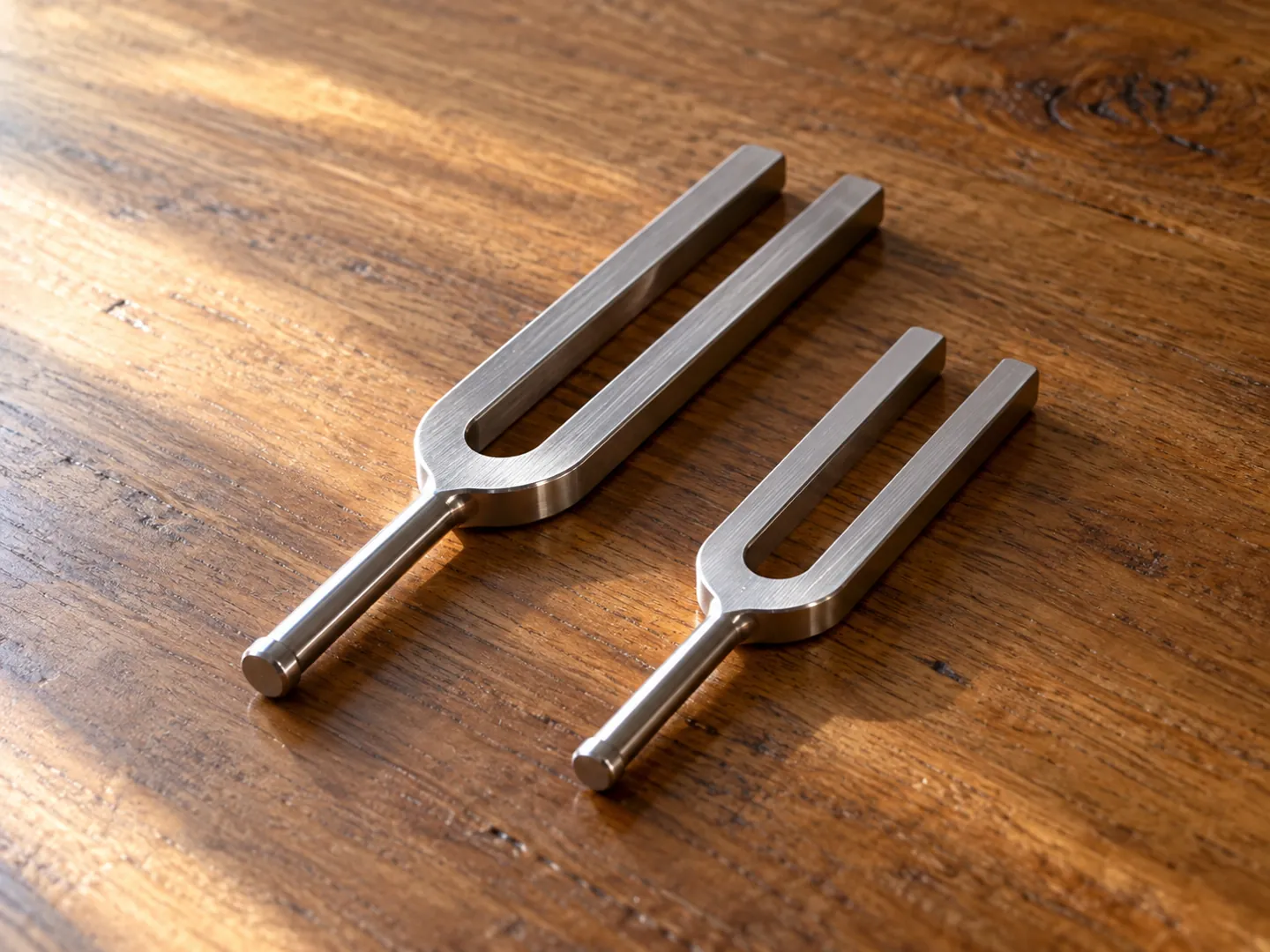
You hear a slow wobble, louder and softer, at the difference between them. Musicians tune by it. Feed one tone to each ear through headphones and the brain hears a beat that is not in either signal: the binaural beat.
Pick a claim about beats to see what the evidence says. The bar shows how strong the support is in the sources below.
Based on a physics teaching page from UNSW Sydney and peer-reviewed studies in Psychological Research and PLOS ONE. This is general information, not medical advice.
TWO NUMBERS WORTH KNOWING
Promising in one review, patchy in another.
One figure from a meta-analysis of effects, one from a review of brainwave studies.
g = 0.45
Overall effect size across 22 studies
Pooling 35 effect sizes on memory, attention, anxiety and pain, the meta-analysis found a medium, significant effect. Exposure before a task did better than exposure only during it.
EFFECTS · PSYCHOLOGICAL RESEARCH 2019
5 of 14
EEG studies backing entrainment
Five studies fitted the idea that the brain falls into step with the beat, eight contradicted it and one was mixed. The authors note the studies used very different methods.
BRAINWAVES · PLOS ONE 2023
Robison and colleagues (2022) set out to test the attention finding with 16 Hz beats and, across three experiments, did not see a consistent benefit. More standardised studies are needed.
FOUR WAYS TO LISTEN
Hear the beat, keep your ears safe.
You can hear acoustic beats with any two instruments. Binaural beats need headphones, because each ear must get its own tone.
Play two near-matching notes
Sound two notes that are almost the same. The slow wobble you hear is the beat, at the difference between them.
Tune until it stops
Adjust one string while the other rings. The beats get slower as the pitches come together, then fade out.
Use headphones for binaural beats
Binaural beats need one tone to go to each ear separately, which is why studies and tracks use headphones rather than speakers.
Keep the volume comfortable
The NHS says the volume should be just high enough for you to hear it comfortably, whatever you are listening to.
AI-generated image, not a photograph of a real person or place.AI-generated image, not a photograph of a real person or place.
WHY THE RESULTS DIFFER
Different beats, different tests.
Studies use different beat frequencies, different background sounds, different listening times and different tasks. The 2019 meta-analysis found that the frequency, the time spent listening and when the listening happened all changed the size of the effect.
The 2023 review found the 14 EEG studies so varied in how they made the beats and measured the brain that their results were hard to compare. Its authors call for standard methods before firm conclusions are drawn.
Questions
Questions people ask
What is a beat in sound?
When two tones with similar frequencies play together they drift in and out of step, so the sound grows louder and softer. The rate of that wobble, the beat frequency, equals the difference between the two frequencies.
What makes a binaural beat different?
The two tones are presented separately, one to each ear. The listener senses a third tone pulsing at the difference frequency, although it is not in either signal. It can be perceived from about 1 to 30 Hz.
Do binaural beats change brainwaves?
The evidence is inconsistent. A 2023 systematic review of 14 EEG studies found five results in line with brainwave entrainment, eight contradicting it and one mixed.
Do binaural beats help you concentrate?
Findings conflict. A 2019 meta-analysis reported a positive effect on attention, but a 2022 study of 16 Hz beats found no consistent evidence of better sustained attention.
How loud should I listen?
The NHS advises not listening to music too loudly: the volume should be just high enough for you to hear it comfortably.